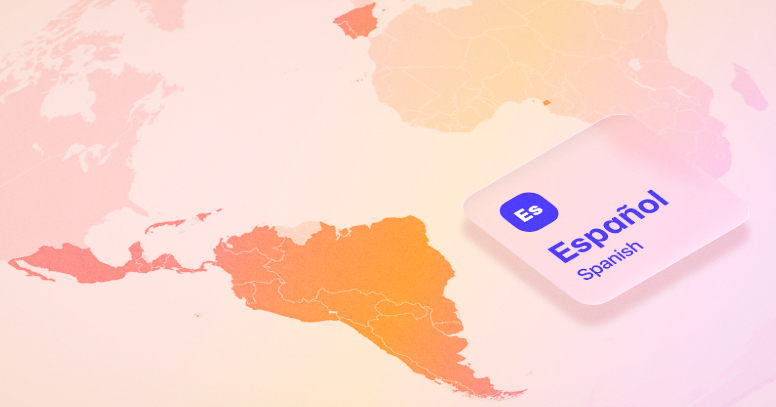
Spanish is a vibrant, global, and constantly evolving language, spoken by over 600 million people, with almost 500 million native speakers. From its roots in Latin to the multiple dialects spoken today in Spain and Latin America, Spanish reflects centuries of history, culture, and adaptation.
In today’s world of international events, virtual conferences, and global meetings, it’s not enough to know the history, you need to ensure that all participants understand each other clearly, whether they speak Spanish from Spain or Latin America. This is where EventCAT makes a difference.
From Latin to Castilian: A Journey Through History
Spanish originated from Latin brought to the Iberian Peninsula by the Romans in 206 B.C., mixing with local languages such as Iberian, Celtic, and Greek. After the fall of the Roman Empire, the Visigoths introduced Germanic words and the -ez ending in many surnames.
Later, Arabic influence left thousands of words still in use today, including azúcar (sugar), algodón (cotton), and alcalde (mayor). During the Reconquista, the Castilian dialect became the standard language, giving rise to modern Spanish and enabling legal, religious, and literary documents to be written in a language accessible to the general population.
Global Expansion of Spanish
After 1492, Spanish spread throughout the Americas, interacting with indigenous languages and developing new dialects. Antonio de Nebrija published the first Spanish grammar, Gramática de la lengua castellana, laying the foundation for standardization.
Although Spanish is also spoken in Guinea Equatorial in Africa, EventCAT currently supports only the Spanish variants of Spain and Latin America for subtitling and real-time translation.
Modern Spanish and Regional Variants

Even though everyone speaks Spanish, there are important regional differences. In Spain, Spanish uses European vocabulary and a formal tone, with examples like vosotros and coger. In Latin America, including Mexico, Colombia, Argentina, Venezuela, and other countries, Spanish features regional vocabulary and a simpler or more neutral tone, with examples like ustedes, tomar, and agarrar.
These differences may seem minor, but in international events they can affect comprehension and participant experience.
How EventCAT Ensures Everyone Understands
Here’s why EventCAT is a strategic ally for global events:
- Smart speech recognition: EventCAT recognizes Spanish from Spain and Latin America, capturing regional nuances.
- Customizable subtitles: You can select the subtitle format that best fits your audience, ensuring clarity and natural expression.
- Global experience: From virtual conferences to hybrid events, EventCAT connects teams and participants worldwide, breaking down language and cultural barriers.
With EventCAT, a cultural reference in Madrid or a comment from Mexico City is understood clearly and naturally by all participants.
The Future of Spanish in International Events
Spanish will continue to evolve, incorporating new words, expressions, and cultural nuances in different regions. For businesses and event organizers, this means that adapting to Spanish-speaking audiences requires tools that understand these variations.
EventCAT doesn’t just translate words: it conveys meaning, tone, and context, ensuring every message lands as intended, preserving the richness of the language and human connection.